
Black Feminism and Intersectionality in 'Quicksand'
A look into the deeper themes of feminism of Nella Larsen's 'Quicksand'

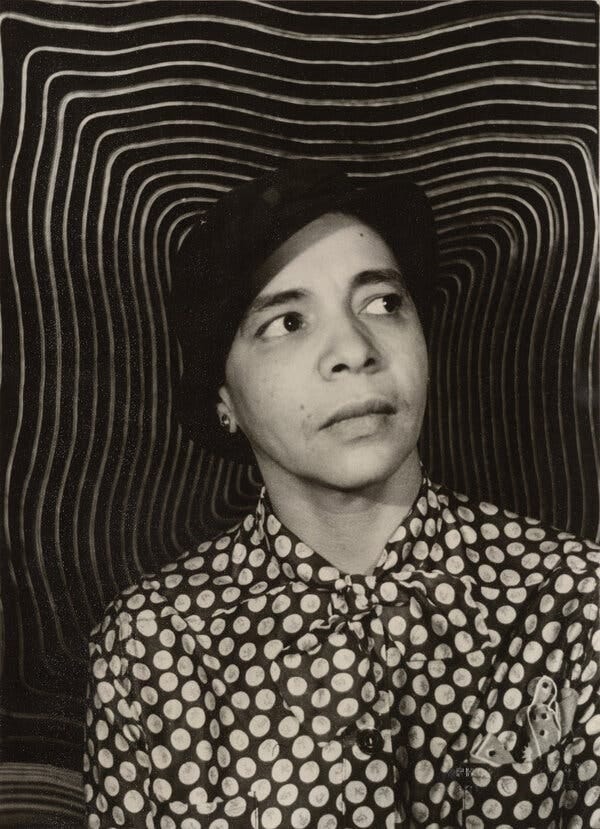
“For the master’s tools will never dismantle the house. They may allow us temporarily to beat him at his own game, but they will never enable us to bring genuine change. And this fact is only threatening to those women who still define the master’s house as their only source of support.”1 This quote is from Audre Lorde, a queer Black feminist of the 70s and 80s who attacks exactly what Nella Larsen is attacking in her novel Quicksand. One cannot dismantle racism by playing by white America’s rules. Larsen wrote Quicksand and the novel Passing during the Harlem Renaissance focusing on themes of feminism, Black women, and the oppressive nature of religion. Larsen was a part of the Harlem Renaissance which took place around the 1920s. The Harlem Renaissance was a political, creative movement birthed in New York where Black artists and writers worked. Their art was politically motivated, challenging contemporary structures and ideas. These artists lived and worked together taking inspiration from each other’s art while arguing over their true opinions.2
At this time, Black feminism was complicated. Black women did not have support from white feminists, nor did they fully have the support of all Black men. They were at an intersectional disadvantage, something Larsen points out. Many female authors and artists were present in the Harlem Renaissance who addressed this intersectionality in different ways. Larsen attacked feminism focusing on the issues of the bourgeois Black women and the oppression of intersectionality, while other authors like Jessie Redmon Fauset, “bowed to social pressures and manners.”3 Nella Larsen, author of Quicksand (1928) and Passing (1929), was a socially and politically challenging author even for the Harlem Renaissance. She upset the white and Black communities pulling no punches in her work. The novel Quicksand follows the story of Helga Crane, a biracial, young adult moving through global cities, struggling to find work and fit in. Helga experiences racism, exoticism, and sexism in a period of time when the meaning of race and social structures were changing. Through the lens of the Harlem Renaissance and Black 20th-century feminism, Quicksand uses Helga’s four romantic encounters to show the illusion of race and its oppression of people with intersectional identities globally, robbing Helga of the power of self-determination.
In the beginning, Helga Crane defines herself consistently by taking action. She is self-assured, confident, and flees when she is unhappy. Helga sees herself as a full person with agency and the ability to be socially mobile. She leaves her job at Naxos, an elite school in the South, when she realizes the students are being taught to be passive to unfair racial structures. Helga decides to leave her stable job, moving to the North, proving her independence. Bettye J. Williams argues that “Helga resists the thickets of racial and sexual oppression by taking flight.”4 Helga wants to find a place and people she loves, so she keeps moving. She continues to struggle with positive self-definition and truly finding her place since she leaves each place after one or two years. She constantly wants to find her people, thinking she succeeds each time, but being disappointed years later. Her disappointment stems from her pride. Helga’s pride is her downfall since the politics of race have made her doubly conscious.5 Being biracial, Helga has a foot in both doors – white America and Black America. The novel makes it clear that she feels as if she needs to choose one over the other. When she is in Harlem, she loves it but feels like she has to deny her white identity. When she is in Copenhagen, she is celebrated for her Blackness, darkness, and exotic beauty – but it demeans her by the end. The Dutch do not understand the intersectionality of race and gender represented by Axel Olsen’s proposal. Olsen wants to marry and have Helga which Helga surmises that he wants to own her. Helga begins to realize this as Helga and Olsen watch the circus where two Black American men sing and dance to old, stereotypical, racial, American songs. Helga is dissatisfied in the way the men are representing themselves, embarrassed and “betrayed.”6 Right after this, the narrative transitions into Olsen’s proposal. Olsen says that she “disturb[s]” him “madden[s]” him and he is constantly longing for her.7 He continues to say she is a contradiction and corrupted but has “the warm impulsive nature of women in Africa, but, my lovely, you have, I fear, the soul of a prostitute. You sell yourself to the highest buyer.”8 Olsen does not see Helga as a woman with agency but sees her by her skin color and supposed ‘soul of a prostitute.’ She retorts back at him saying she is not for sale and would never be owned, especially by a white man which he responds to with confusion like a “puzzled baby.”9 Helga laughs at his confusion, knowing he does not understand her or race. This summarizes why Helga gets so frustrated at each city she moves to. No one accepts her full identity or her independence. She is expected to fit into one category, but she doesn’t, and this lack of society’s understanding continually frustrates her.
Throughout her travels, Helga’s mind constantly comes back to Dr. Robert Anderson and James Vayle, two men she had past romantic encounters with. She slowly realizes she has an emotional connection and sexual attraction to both of these men but suppresses these feelings. She does not realize her feelings for Dr. Anderson until he marries Anne, then again when Anderson kisses Helga. She is repulsed by these thoughts and continually shuts them away. During the kiss Helga struggles at first to deny Anderson but then gives into the kiss; “all power seemed to ebb away, and a long-hidden, half-understood desire welled up in her with the suddenness of a dream.”10 She then is “embarrassed” and “sudden anger seized her”11 as she pushes him away returning to the party. In this scene we see Helga accept her desires but immediately dismiss them. She feels as if they are wrong, and she can never be with Anderson since he is married. She calls herself a “silly fool” and feeling her self-esteem and her “self-assurance had gone down in a crash.”12 Helga is independent denying men’s affections and finding their sexual harassment harmful yet does not open herself to the world to let herself experience love freely. She blocks herself from love and falling in love because of her pride. Helga’s pride is her downfall, caused by internalizing the racism shown to her and double consciousness. She sees herself as her race and a woman and nothing more by the end of the novel.
Helga and James Vayle’s relationship becomes a commentary on motherhood and Harlem Renaissance theory like W.E.B. DuBois’ talented tenth argument. Helga, fiercely independent, does not just want to be a mother. She in fact, does not want children at all. She does not want to force her progeny to live in a country that hates them: “Think of the awfulness of being responsible for the giving of life to creatures doomed to endure such wounds to the flesh, such wounds to the spirit, as Negroes have to endure.”13 Helga refers to the racism and lynching Black Americans face daily. James is “aghast” and “forgets to be embarrassed”14 he is so shocked by her biting remark. He argues that the Black intelligentsia, like Helga and him, should be the only Black people having children to make the population and race more elite.15 This is like DuBois’ argument for the talented tenth which encompassed the idea that if the top ten percent of Black Americans become highly educated, powerful, and wealthy, they will be able to raise the rest of the race up. Helga knows that children enslave you to American capitalism, racism, and takes away your freedom of choice. When you have children, you are forced to care for them, putting them first, enslaving you to American ideals like materialism.16 Larsen is arguing these philosophies out through Helga - common for the Harlem Renaissance. Authors would use essays or their novels to directly respond, argue, and agree with other Black philosophers, giving their personal views. What is so important about Larsen, is that she was one of the few women getting attention for writing her responses. She got mostly negative attention, but she was fighting for Black feminism and challenging the way people thought about being interracial. There were many female artists and writers in the Renaissance, but they slowly have been forgotten or erased. Larsen is able to show how American racism destroys the chance of someone being human. Helga is unable to accept herself in a patriarchal, racialized world. Helga’s relationship with men and James shows the restrictions of heteronormativity, especially in America where you are trapped by your gender, race, and family status.
By the end of the novel, Helga decides to marry the preacher, Reverend Mr. Pleasant Green, who she finds when she is in the middle of her mental breakdown. She accepts heteronormativity and living in rural Alabama. Her social mobility was an illusion and her race is what defines her now, forcing her into motherhood. Helga has been looking for happiness and belonging which she has found short term in each location, but now thinks God and religion are her last resort. Eternal salvation and protection is her last chance at true happiness:
It was a chance at stability, at permanent happiness that she meant to take. She had let so many other things, other chances, escape her. And anyway, there was God, He would perhaps make it come out all right.17
Helga puts all her faith in religion, giving up on a world that accepts her as an independent, single woman. Historically religion has been used to keep people oppressed. Larsen points out the religion tells people to be happy in suffering and forgive others for doing them wrong. Larsen pushes against this idea calling out how one should not tolerate poverty or submission. Religion becomes an opium or a comfort blanket for all the bad things that happen to a person, rather than blaming a system of oppression that should be blamed.
Society internationally cannot respect Helga’s intersectional identity – of being a mixed-race woman with agency and interests. The confines of her sexuality force her into heteronormativity since women seem to only have two choices – motherhood or destitution. Helga beleives there are no other choices for fulfillment or happiness than what has been assigned to her by America. Helga is trapped in motherhood, reflecting on her own childhood of loneliness and abandonment knowing she cannot treat her children the same way: “She couldn’t desert them” and dreamed of freedom, promising herself she would find a way to freedom.18 In the end, she becomes pregnant with a fifth child, forever trapped in a cycle of illness, motherhood, and oppression in the South.
Through the lens of the Harlem Renaissance and Black 20th-century feminism, Quicksand uses Helga’s four romantic encounters to show the illusion of race and its oppression of people with intersectional identities globally, robbing Helga of the power of self-determination. Racism caused Black women to lack social mobility, affecting beauty standards and consciousness. Black women’s cross-cutting identities disadvantaged them even more – having to work against racism and patriarchy. Helga’s fleeting relationship with Axel Olsen represents the misunderstanding of the intersectionality of biracial women during the Harlem Renaissance. Her experiences with Dr. Anderson show how beauty standards and how an unaccepting society affects the personal romance of women. Helga’s disagreement with James Vayle brings other Harlem Renaissance authors and ideas into the conversation while challenging them. Finally, her marriage to the Reverend exemplifies the illusion of race and how it traps non-whites in a cycle, specifically a cycle of motherhood for Helga and other women. Quicksand challenges ideas of the Harlem Renaissance while putting intersectionality and feminism at the forefront. Like Audre Lorde, Nella Larsen was challenging the ideas of race and patriarchy leading the way for Black feminism and nuanced views of race.
References
Hemming, Matty. “‘Mrs. Don’t Care’: Refusing Modern Black Motherhood in Nella Larsen’s Quicksand.” Medical Humanities 50, no. 2 (2024): 276–284.
Larsen, Nella. Quicksand. Knopf: New York, New York: 1928. Martino Publishing: (Mansfield Centre, CT: 2011).
Lorde, Audre. Sister Outsider: Essays and Speeches. “The Master’s Tools Will Never Dismantle The House.” Trumansburg, N.Y: Crossing Press, 1984.
Phipps, Gregory Alan. 2016. “Breaking Down Creative Democracy: A Pragmatist Reading of Race and Gender in Nella Larsen’s Quicksand.” English Studies in Canada 42 (3/4): 135–57. doi:10.1353/esc.2016.0031.
Williams, Bettye J. “Nella Larsen: Early Twentieth-Century Novelist of Afrocentric Feminist Thought.” CLA Journal 39, no. 2 (1995): 165–178. http://www.jstor.org/stable/44322940.
Audre Lorde, “The Master’s Tools Will Never Dismantle the House.”
Like W.E.B. DuBois’ and Booker T. Washington’s argument over race, education, and social structure.
Bettye J. Williams, “Nella Larsen: Early Twentieth Century Novelist of Afrocentric Feminist Thought”, p. 170.
Williams, “Nella Larsen: Early Twentieth Century Novelist of Afrocentric Feminist Thought,” p. 173.
One of W.E.B. DuBois ideas.
Larsen, Quicksand, p. 76-77.
Larsen, Quicksand, p. 81.
Ibid.
Ibid.
Larsen, p. 97.
Ibid.
Larsen, p. 101.
Larsen, p. 96
Ibid.
Ibid.
Reference to Karl Marx’s argument capitalism supports children becoming the next, new, cheap labor force. Jean Toomer and many other Harlem Renaissance authors were interested in the ideas of communism and anti-capitalism focusing on the oppressive structures of religion, poverty, and race that keep the masses down.
Larsen, p. 108.
Larsen, p. 125.